
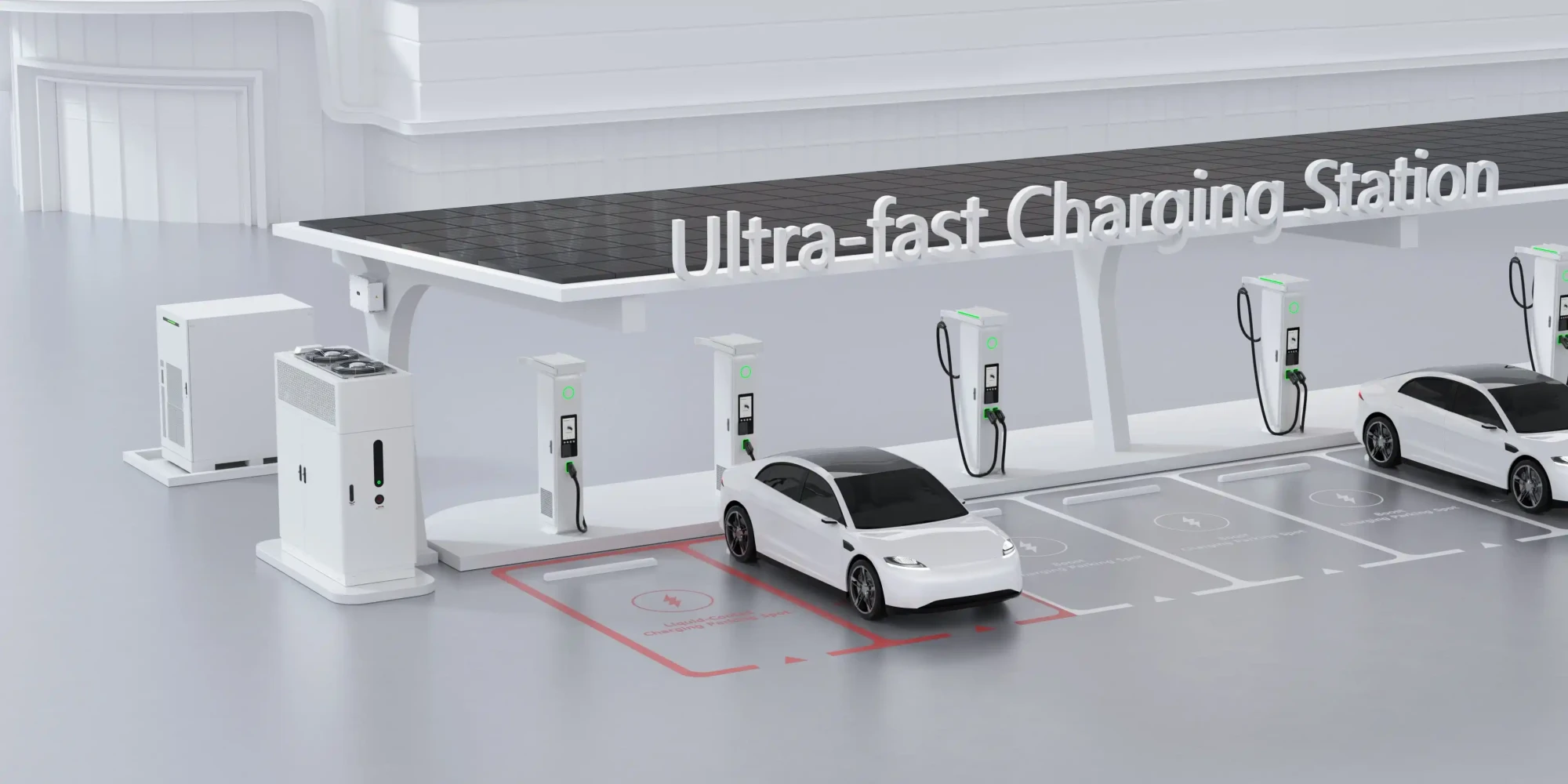
For a charging site connected to solar and batteries, equipment decisions must follow the required service and the conditions of the actual site. Smart charging coordinates electrical demand, vehicle needs and charging equipment rather than delivering a fixed output from every connector. Huawei Digital Power’s network portfolio includes shared DC conversion, liquid-cooled dispensers and charging modules that support managed power allocation across a site. In this context, smart charging brings together specific components and controls rather than a single isolated device.
PV and battery integration can shift some energy use, but dispatch decisions must remain inside equipment safety limits. Equipment ratings, control policies and the responsibilities of the operating team should therefore be aligned before commissioning. A design assumption should be documented when it cannot yet be confirmed by measurements.
The power-sharing layer
In a shared DC charging architecture, multiple dispensers can draw from a common pool of conversion modules. A power allocation controller assigns available output among connected vehicles according to demand and electrical limits.


Charging power changes through the session as vehicle temperature and battery state of charge evolve. A controller that follows the requested current can redirect capacity that a tapering vehicle no longer uses, improving utilization of installed converter hardware.
Sensing and communication
Each charging session relies on exchange of vehicle status, permissible voltage and current, and fault information. Insulation monitoring and connector temperature protection should remain effective even if higher-level scheduling software is unavailable.
Thermal information is particularly relevant for liquid-cooled high-current dispensers. Monitoring pump or coolant conditions alongside connector temperatures helps the maintenance team identify a cooling problem before repeated high-power sessions are affected.


Energy management and reliability
Smart load control can set an aggregate charging ceiling based on the site’s current import conditions. This allows charging to coexist with other electrical loads when network capacity is constrained.
Battery or PV integration introduces an additional scheduling layer. A controller may use local generation or stored energy during a defined period, while protection, charge limits and thermal safeguards remain independent of tariff optimization.
Using operational data
A queueing problem may indicate insufficient parking bays, while low delivered power may come from vehicle acceptance limits or constrained site capacity. The corrective action differs, so the monitoring system should keep these causes separate.


A growing site can add compatible dispensers or conversion capacity in stages when the electrical network permits. Controls should be tested under simultaneous charging and communication-loss conditions before capacity changes are released to users.
These considerations show why smart charging should be specified by its architecture, operating limits and interfaces. Smart charging is ultimately the coordination of power electronics, thermal constraints, vehicle requests and site operations. It allows charging capacity to be managed more deliberately without assuming that every session will use the maximum equipment rating. The final selection still depends on applicable standards, actual site conditions and model-specific documentation.