
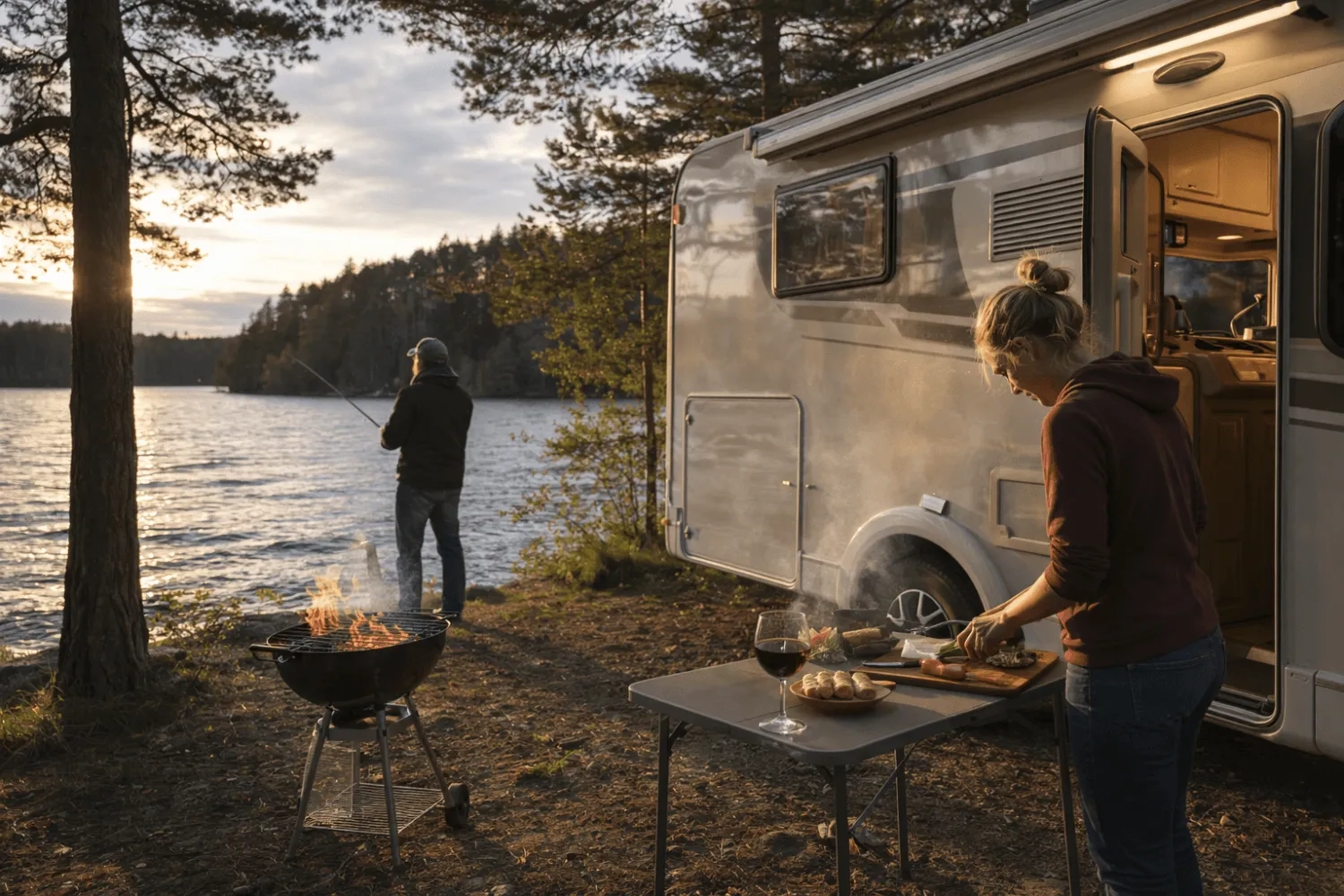
For many young travelers, smartphones are an inseparable part of everyday life. They are used for work, entertainment, communication, navigation and even choosing where to eat or what to visit.
Yet the more connected everyday life becomes, the more attractive it can be to temporarily step away from the screen.
This does not necessarily mean going somewhere without internet access or abandoning technology completely. Sometimes it simply means changing the way we experience our surroundings. Instead of spending a weekend moving between airports, hotels and crowded tourist attractions, travelers can choose a slower and more flexible way to explore.


Motorhome travel is one example of this changing approach to holidays.
Travel is becoming more about experiences
Younger travelers are increasingly interested in experiences rather than simply collecting destinations.

A photograph in front of a famous landmark can be memorable, but it does not necessarily tell the whole story of a journey. Spending a morning in a small coastal town, discovering a local market or watching the sunset from an unexpected viewpoint can create a much stronger connection with a place.
A road trip naturally encourages this type of travel because the journey itself becomes part of the experience.
There is no need to treat every kilometer as time lost between two destinations. The road can become an opportunity to discover something that was not included in the original plan.


A different relationship with technology
Technology remains extremely useful during a motorhome trip.
A smartphone can help with navigation, weather forecasts, finding restaurants and discovering attractions. Digital maps make it much easier to change a route when circumstances change.
The important difference is that technology becomes a tool rather than the main focus of the experience.
After spending hours looking at social media feeds or working in front of a computer, there is something refreshing about looking through a vehicle window and seeing an unfamiliar landscape instead.
This balance between digital convenience and real-world exploration is particularly relevant for younger travelers who have grown up surrounded by technology.
Freedom is part of the attraction
Traditional holidays often depend heavily on reservations. A hotel is booked in one city, transport is arranged to reach it, and the itinerary is built around fixed dates.
A motorhome offers a different level of flexibility.
Travelers can decide how long they want to stay in a particular place and adjust the route according to their interests. If a destination turns out to be more interesting than expected, there is no immediate need to move on simply because the next hotel has already been booked.
For people who value independence, a flexible way to travel around Spain by motorhome can turn the journey itself into one of the main attractions.
Spain is particularly suitable for road trips
Spain offers an interesting combination of landscapes and travel experiences.
The Mediterranean coastline provides beaches and seaside towns, while inland areas offer mountains, historic cities, villages and natural landscapes. This variety makes it possible to create very different routes depending on the season and the interests of the traveler.
A trip can combine well-known destinations with quieter places that are less likely to appear on a standard tourist itinerary.
This is one of the advantages of traveling by road: the route does not have to be limited to the most famous locations.
Longer journeys can change the pace of travel
Not everyone has the opportunity to take several weeks away from work or studies. However, for those who do, a longer trip can provide a completely different experience.
Instead of trying to see as many places as possible, travelers can spend more time in each region.
For people interested in this style of travel, long-term motorhome hire for an extended stay in Spain can be an option worth considering. It allows the journey to be planned around a longer period rather than treating the motorhome simply as transportation for a short holiday.
The key is not to fill every day with activities. Leaving free time can be just as valuable as planning specific destinations.
The social side of road travel
Motorhome travel can also create opportunities for social experiences.
Road trips often bring travelers into contact with people they might never meet during a conventional city break. Local cafés, markets, campsites and small towns can provide opportunities to interact with residents and other travelers.
For younger generations accustomed to maintaining friendships primarily through messaging apps and social networks, face-to-face interactions can feel surprisingly meaningful.
A short conversation with another traveler or a recommendation from a local resident can sometimes become one of the memories that defines the entire journey.
It does not have to be a digital detox
The idea of disconnecting from technology does not mean rejecting it completely.
In fact, the best road trips often combine technology with spontaneity.
A navigation app can help find a destination, while curiosity can determine whether you actually follow the suggested route. A travel platform can recommend a place, but the decision to stay longer can be based on what you experience after arriving.
The goal is not to replace digital life with a completely disconnected lifestyle. It is to create enough space for direct experiences to become important again.
A new way to think about holidays
For a generation used to fast communication and constant access to information, travel can offer something increasingly valuable: time.
Time to explore without rushing. Time to change plans. Time to notice details that would normally be overlooked.
Motorhome travel is not necessarily the right choice for everyone, but it represents a broader change in how people think about tourism. The destination is no longer the only important part of the journey. The route, the freedom to make decisions and the experiences along the way can be equally valuable.
And perhaps that is why the open road continues to attract a new generation of travelers. In a world where almost everything can be accessed instantly through a screen, there is still something special about getting behind the wheel, choosing a direction and discovering what is waiting beyond the next turn.